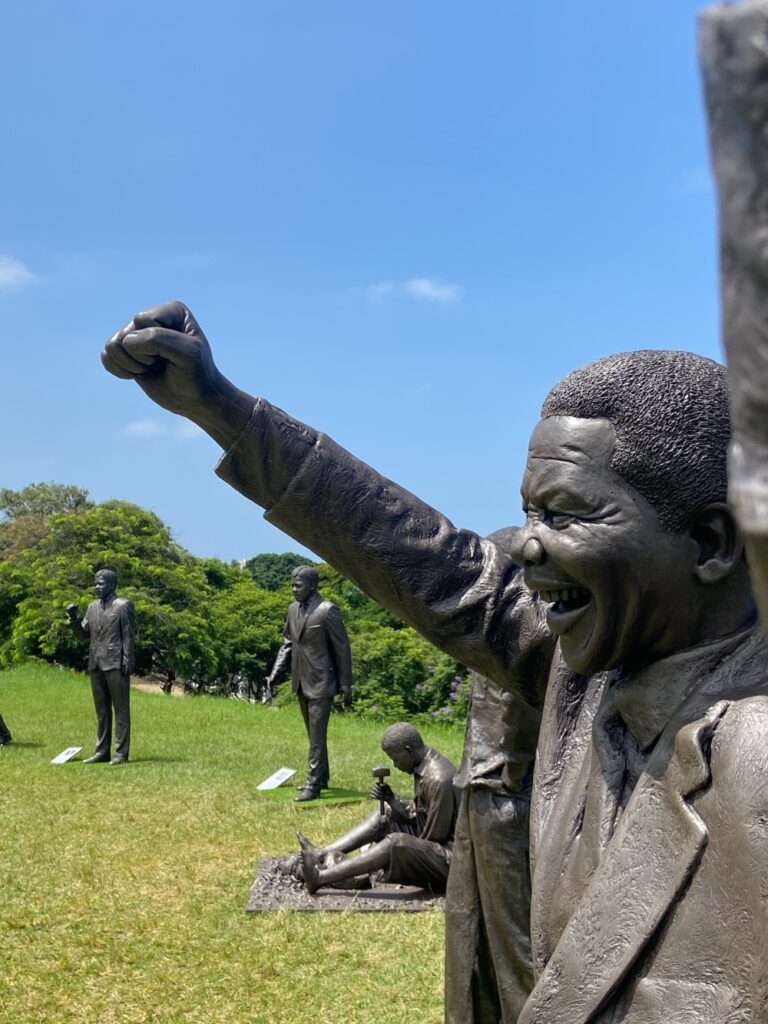
Credits to Minenhle Shelembe
Nelson Mandela is one of the most influential and revered leaders of the 20th century. Born in South Africa in 1918, Mandela dedicated his life to fighting against the system of apartheid that was in place in his country. Despite being imprisoned for 27 years for his political activism, Mandela emerged as a symbol of hope and reconciliation, and his leadership played a key role in the eventual dismantling of the apartheid system.
Early Life and Political Activism
Mandela was born into a royal family in the Eastern Cape region of South Africa. He studied law at the University of Witwatersrand, and became involved in political activism in the 1940s. In 1948, the National Party came to power in South Africa, and began implementing a system of racial segregation known as apartheid.
Mandela became increasingly involved in the struggle against apartheid, and joined the African National Congress (ANC) in the 1950s. He was a charismatic and effective speaker, and his leadership and advocacy helped to galvanize support for the anti-apartheid movement.
Imprisonment and Emerging as a Symbol of Hope
In 1962, Mandela was arrested and charged with treason for his political activism. He was sentenced to life in prison, and spent the next 27 years behind bars. Despite the harsh conditions of his imprisonment, Mandela remained committed to the cause of freedom and justice, and became a symbol of hope and inspiration for people around the world.
Throughout his imprisonment, Mandela continued to advocate for the end of apartheid and the establishment of a democratic, non-racial South Africa. He refused to compromise his principles or his commitment to the cause of freedom and justice, and his leadership continued to inspire and galvanize the anti-apartheid movement.
Release and Leadership of a New South Africa
In 1990, after years of international pressure and political maneuvering, Mandela was released from prison. He emerged as a symbol of hope and reconciliation, and his leadership played a key role in the eventual dismantling of the apartheid system.
Mandela continued to advocate for the establishment of a democratic, non-racial South Africa, and his leadership and vision helped to guide the country through a difficult and tumultuous transition. He became the first black president of South Africa in 1994, and worked tirelessly to build a more just and equitable society.
Legacy
Mandela’s leadership and commitment to the cause of freedom and justice continue to inspire and influence people around the world today. He is remembered as a symbol of hope and reconciliation, and his legacy serves as a reminder of the power of individual action and leadership to effect positive change in the world.
His legacy as a leader and statesman continues to inspire and influence people around the world today, and his example serves as a beacon of hope and inspiration for all who seek to build a better, more just and equitable world.
What Has Been the Impact on the World?
Nelson Mandela’s leadership and advocacy for human rights and social justice have had a profound impact on the world, as mentioned. His vision helped to shape the future of the world in countless ways.
Mandela’s leadership played a key role in the dismantling of the apartheid system in South Africa, and helped to establish a democratic, non-racial society in the country. His commitment to the cause of freedom and justice helped to inspire people around the world to fight against oppression and inequality, and his example served as a powerful reminder of the power of individual action to effect positive change in the world.
Mandela’s leadership helped to promote reconciliation and forgiveness in South Africa. Despite the violence and oppression of the apartheid era, Mandela remained committed to the idea that people of all races and backgrounds could come together to build a better, more just and equitable society. His leadership and advocacy helped to heal the wounds of South Africa’s troubled past, and his commitment to reconciliation and forgiveness continues to inspire people around the world today.
In addition to his leadership in South Africa, Mandela was also a global advocate for human rights and social justice. He played a key role in the establishment of the International Criminal Court, which is dedicated to prosecuting individuals for war crimes, crimes against humanity, and genocide. His advocacy for human rights and social justice helped to shape the global conversation on these issues, and continues to inspire people around the world to work towards a more just and equitable world.
Mandela’s leadership and advocacy also helped to promote the importance of education and social development. He believed that education was key to breaking the cycle of poverty and inequality, and he worked tirelessly to promote access to education and to support social development initiatives. His advocacy for education and social development has had a lasting impact on the world, and continues to inspire people to work towards a more equitable and just society.
Mandela’s legacy also includes his advocacy for environmental sustainability and conservation. He believed that protecting the environment was essential to ensuring a sustainable future for all people, and he worked tirelessly to promote environmental sustainability and conservation initiatives. His advocacy for environmental sustainability and conservation continues to inspire people around the world to take action to protect the planet and promote sustainability.
Overall, Mandela’s leadership and advocacy for human rights, social justice, education, environmental sustainability, and reconciliation have had a profound impact on the world. His legacy continues to inspire and influence people around the world, and his example serves as a powerful reminder of the power of individual action and leadership to effect positive change in the world.
Nelson Mandela’s story serves as a powerful example of how one person can make a lasting difference in the world. Through his leadership, vision, and unwavering commitment to the cause of freedom and justice, Mandela helped to shape the future of his country and the world, and his legacy continues to inspire and influence people today.