Leonardo da Vinci, the quintessential Renaissance man, is celebrated not only for his timeless artistic masterpieces but also for his remarkable contributions to the fields of engineering and design. In an era where the boundaries between art and science were fluid, da Vinci stood as a visionary bridge between these disciplines. His innovative integration of art and engineering set a precedent for design thinking that continues to influence a wide range of fields, from architecture and industrial design to contemporary creativity and innovation.
The Renaissance Context
The Renaissance, a cultural and intellectual movement spanning the 14th to the 17th centuries, was marked by a reawakening of interest in art, science, and human potential. During this period, the rigid barriers separating art and engineering had not yet emerged, fostering a fertile environment for the flourishing of polymaths like Leonardo da Vinci.
The Vitruvian Man: A Manifesto of Proportions
One of da Vinci’s most iconic works, the Vitruvian Man, embodies his fusion of art and engineering. This meticulous illustration of a man inscribed within both a circle and a square is not only an aesthetic masterpiece but also a treatise on ideal proportions. Da Vinci’s fascination with human anatomy and geometry merged in this piece, highlighting the interconnectedness of art and engineering.
The Vitruvian Man emphasized da Vinci’s belief in the universality of design principles, a concept that continues to influence architecture and industrial design today. His exploration of human proportions is echoed in ergonomic design, shaping everything from architectural spaces to consumer products, all designed with human comfort and utility in mind.
The Anatomy of Innovation
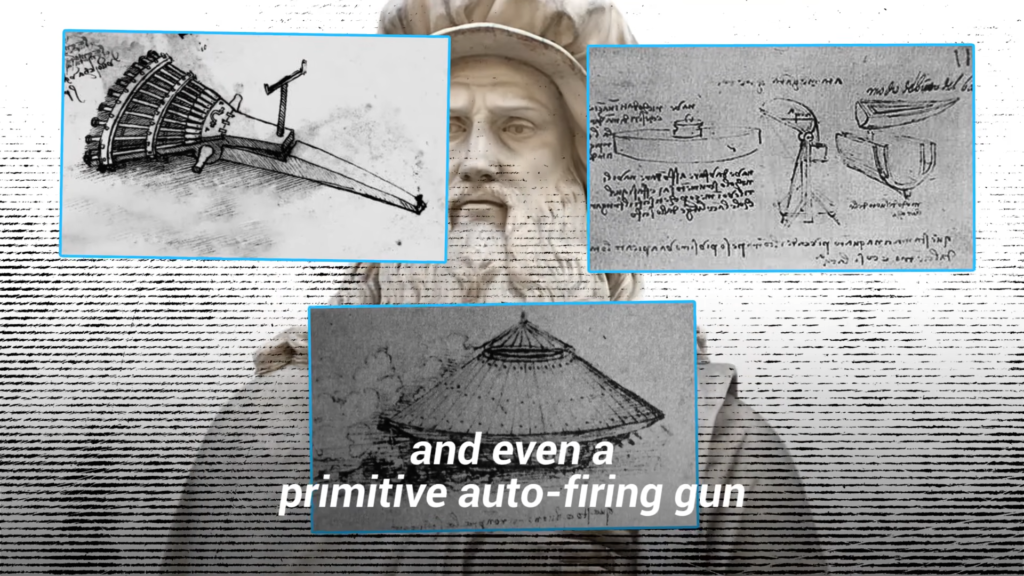
Leonardo da Vinci’s renowned notebooks are treasure troves of ideas and inventions. From flying machines and armored vehicles to hydraulic pumps and bridges, he employed his artistic sensibilities to create practical engineering solutions. Da Vinci’s bridge designs, for example, merged aesthetics with function, displaying an understanding of both structural integrity and visual appeal. His notebooks served as early prototypes for contemporary design thinking and the interdisciplinary approach to innovation.
From Sketches to Structures: Architectural Influence
Da Vinci’s foray into architectural design extended to imaginative city planning. He envisioned urban spaces that prioritized functionality, aesthetics, and social cohesion, emphasizing the importance of public welfare and harmony. His architectural concepts continue to inspire urban planners and designers, fostering a sense of place that accommodates both form and function.
Industrial Design Precursor
Leonardo da Vinci’s insights into design extended to products as well. He sketched devices for spinning, weaving, and manufacturing, showcasing his ingenuity in improving everyday tools. His forward-thinking approach laid the groundwork for modern industrial design, emphasizing the importance of marrying form and function in consumer products.
Da Vinci’s Enduring Influence
Leonardo da Vinci’s legacy as an artistic and engineering visionary lives on, leaving a profound imprint on the fields of architecture and industrial design. His ability to merge the worlds of art and engineering exemplifies design thinking, a practice that remains highly relevant in contemporary society. The interdisciplinary nature of his work continues to inspire innovative solutions and creative problem-solving in the modern world.
Leonardo da Vinci’s pioneering integration of art and engineering has had a transformative impact on various fields, influencing architecture, industrial design, and design thinking. His legacy serves as a reminder that the convergence of artistic creativity and technical innovation can yield groundbreaking solutions, shaping the future of design and engineering for generations to come. Da Vinci’s genius, which seamlessly fused aesthetics and engineering, remains a testament to the boundless potential of interdisciplinary thinking and the enduring power of the Renaissance spirit.