In the annals of scientific history, few names resonate as profoundly as Charles Darwin. His groundbreaking work, “On the Origin of Species,” published in 1859, not only revolutionized biology but also fundamentally transformed our understanding of life on Earth. Charles Darwin’s theory of evolution by natural selection was a scientific revelation that shook the foundations of established thought and laid the groundwork for modern biological science. In this article, we will explore the life, ideas, and enduring legacy of Charles Darwin, a visionary whose contributions continue to shape the biological sciences.
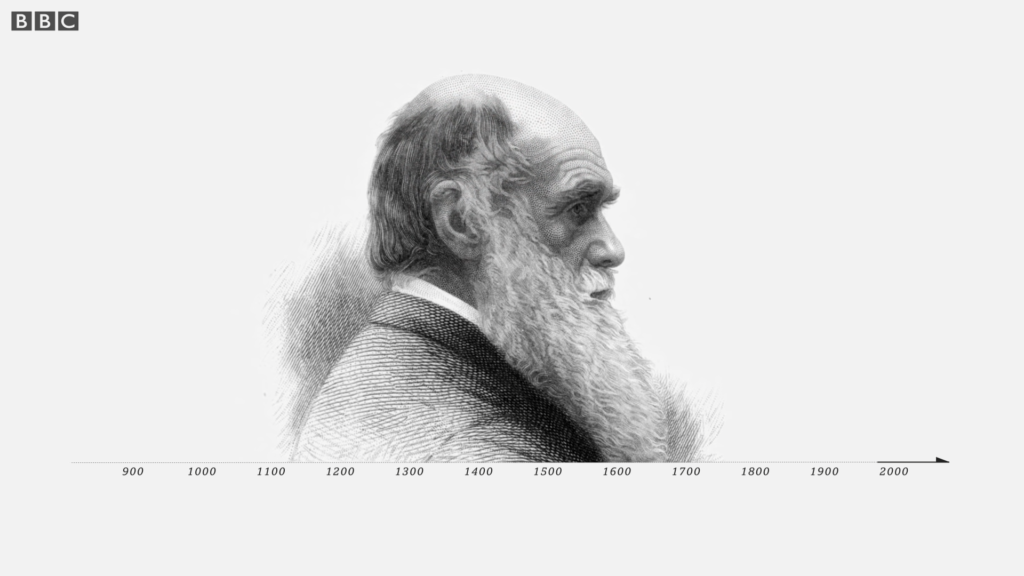
Early Life and Education
Charles Robert Darwin was born on February 12, 1809, in Shrewsbury, England. He came from a family of wealth and privilege, with his father being a prominent physician. From an early age, Darwin showed an interest in the natural world, collecting specimens and displaying a curiosity that would define his future endeavors.
Darwin’s education was diverse. He attended Edinburgh University, where he briefly studied medicine, and later, he pursued a degree in theology at Christ’s College, Cambridge. It was during his time at Cambridge that he was introduced to the influential ideas of geology and natural history. He became an avid collector and joined the Plinian Society, a group of naturalists.
The Voyage of the Beagle
One of the most significant events in Darwin’s life was his voyage on the HMS Beagle, a survey ship sent on a five-year expedition around the world. Darwin served as the ship’s naturalist, a role that allowed him to explore diverse ecosystems and collect an abundance of specimens.
During his travels, most notably in the Galápagos Islands, Darwin observed variations in species that would later form the cornerstone of his theory of evolution. He noted that the finches and tortoises of the Galápagos displayed unique adaptations to their environments, sparking his curiosity about the origin of these variations.
The Theory of Evolution by Natural Selection
After returning to England in 1836, Darwin began to carefully study and document his findings. His observations and a fortuitous reading of Thomas Malthus’ essay on population growth led him to formulate the concept of natural selection.
The crux of Darwin’s theory was elegantly simple yet transformative: within a population, individuals with traits that were advantageous for survival and reproduction would pass on those traits to their offspring. Over time, this would lead to the accumulation of favorable traits in the population, driving evolutionary change. Conversely, traits that were less advantageous would diminish over generations.
Darwin’s theory of natural selection explained the diversity of life on Earth without the need for divine intervention, challenging the prevailing religious and creationist views of the time. It was a revolutionary concept, but it was also met with skepticism and controversy.
“On the Origin of Species”
In 1859, after decades of meticulous research and reflection, Charles Darwin published his magnum opus, “On the Origin of Species by Means of Natural Selection.” The book presented a compelling argument for evolution and natural selection, supported by a wealth of evidence from various fields, including paleontology, biogeography, and embryology.
Darwin’s work ignited a firestorm of debate and discussion. While some scientists embraced his ideas, many religious leaders and conservative thinkers vehemently opposed them. The clash between science and religion was intense, and it highlighted the profound implications of Darwin’s theory for our understanding of life’s origins and our place in the natural world.
Legacy and Impact
Charles Darwin’s theory of evolution by natural selection has had an enduring impact on the biological sciences and our broader understanding of the natural world. Here are some key aspects of his legacy:
1. Revolutionizing Biology
Darwin’s work provided a unifying framework for the biological sciences. It explained the diversity of life, the relationships between species, and the processes that drive evolutionary change. His ideas formed the basis for modern biology, influencing fields such as ecology, genetics, and evolutionary biology.
2. A Catalyst for Scientific Inquiry
Darwin’s emphasis on empirical evidence and careful observation set a standard for scientific rigor. His approach to research encouraged subsequent generations of scientists to critically examine the natural world and seek evidence-based explanations.
3. A Bridge Between Disciplines
Darwin’s ideas transcended biology and had implications for fields as diverse as anthropology, psychology, and philosophy. They sparked discussions about human origins, behavior, and the ethical implications of evolution.
4. A Foundation for Conservation
Darwin’s insights into the interconnectedness of species and ecosystems laid the groundwork for modern conservation biology. His work highlighted the importance of preserving biodiversity and the delicate balance of life on Earth.
5. A Source of Inspiration
Charles Darwin’s life and work continue to inspire scientists, educators, and thinkers worldwide. His journey from a young naturalist on the HMS Beagle to a revolutionary scientist serves as a testament to the power of curiosity, perseverance, and the pursuit of knowledge.
Charles Darwin’s theory of evolution by natural selection was a transformative idea that reshaped our understanding of life and our place in the natural world. It challenged deeply ingrained beliefs and ignited debates that continue to this day. Yet, through his careful research, meticulous documentation, and unwavering commitment to scientific inquiry, Darwin provided a profound and enduring gift to humanity: a deeper comprehension of the intricate web of life that surrounds us. His legacy lives on, not only in the pages of scientific textbooks but in the hearts and minds of those who continue to explore the wonders of the natural world.